

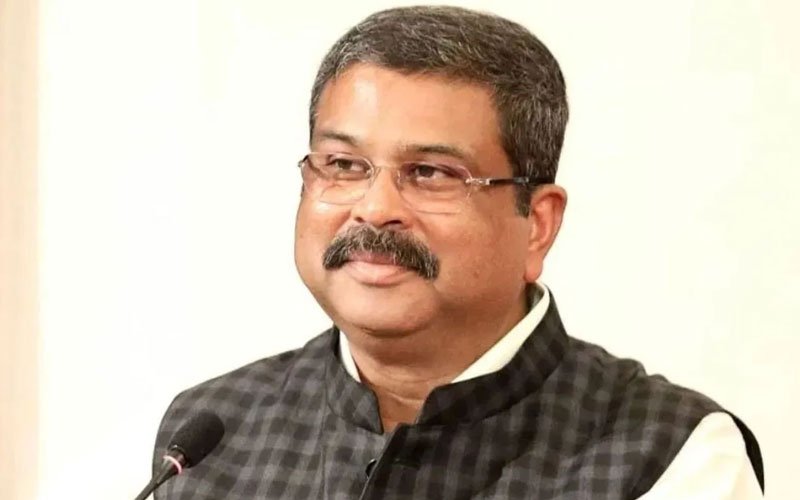
New Delhi: A series of significant political developments unfolded on Saturday in connection with the NEET examination controversy, culminating in the resignation of Union Education Minister Dharmendra Pradhan and the conclusion of a month-long protest following successful negotiations between the Centre and the Cockroach Janta Party (CJP).
The developments came after weeks of nationwide demonstrations over alleged irregularities in the NEET-UG examination, an issue that has sparked a Central Bureau of Investigation (CBI) probe and prompted the government to introduce major reforms to the country’s medical entrance examination process.
In a letter addressed to the nation’s youth, Dharmendra Pradhan announced that he had submitted his resignation to Prime Minister Narendra Modi, saying he was accepting moral responsibility for the circumstances that had emerged. He said the decision was taken after reflecting on the situation across the country, particularly the prolonged protests in the national capital.
Pradhan stated that he had spent more than four decades working towards strengthening India’s education system and reiterated that the government had responded swiftly after allegations of irregularities surfaced. According to him, the Centre ordered a CBI investigation, cancelled the disputed examination, announced a fresh test and decided that the NEET examination would shift to a computer-based format from the next academic year.
He also maintained that every effort had been made to protect the interests of deserving students and to curb the activities of organised groups involved in examination malpractice. Explaining his decision to resign, Pradhan said he hoped it would help reduce tensions and allow students to focus on their education.
Shortly after the minister’s resignation, representatives of the Centre and the Cockroach Janta Party (CJP) held a third round of discussions to resolve the ongoing agitation. The talks ended with the government agreeing to withdraw the First Information Reports (FIRs) filed against peaceful protesters.
Following the meeting, the CJP announced the immediate end of its 36-day protest at Jantar Mantar. The organisation said it was withdrawing the agitation in good faith after the government accepted its principal demands.
The end of the protest also led to the restoration of normal public transport operations in the national capital. The Delhi Metro Rail Corporation (DMRC) reopened entry and exit gates at all Metro stations that had been placed under security restrictions during the demonstrations. Earlier, services had resumed at Rajiv Chowk, Mandi House and Central Secretariat before restrictions were lifted across all 18 affected stations.
Saturday’s developments represent the most significant political consequences of the NEET controversy so far. The issue has generated widespread public debate over the integrity of competitive examinations and has accelerated reforms aimed at strengthening transparency, accountability and security in India’s examination system.