

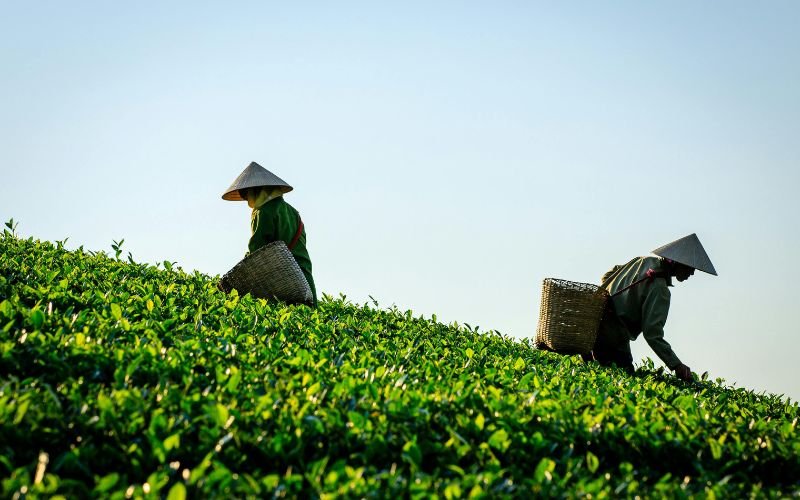
Guwahati, March 10: The Assam government has approved an interim increase of ₹30 in the daily wages of tea garden workers, bringing relief to lakhs of labourers engaged in the state’s tea industry. The revised wages will come into effect from April 1, 2026, following approval by the state cabinet and the Minimum Wages Advisory Board.
According to a notification issued by the Labour Welfare Department, tea workers in the Brahmaputra Valley will now receive ₹280 per day, up from ₹250. Workers in the Barak Valley will receive ₹258 per day after the revision. The new wage structure will also apply to workers employed in small tea gardens across the state.
Chief Minister Himanta Biswa Sarma stated that the hike is an interim measure and discussions will continue with labour unions and tea garden management to determine a final wage structure in the coming months.
Assam’s tea sector employs more than 10 lakh workers across nearly 850 tea estates, making wage revisions a significant socio-economic issue for the state. The increase is expected to provide some relief to tea garden labourers, whose wages have long been a subject of debate.
Historically, wages of tea plantation workers in Assam were determined through negotiations between tea companies and workers’ representatives. The last such agreement was signed in February 2015 between the Consultative Committee of Planters Association (CCPA) and the Assam Chah Mazdoor Sangha (ACMS). Under that agreement, wages rose from ₹94 to ₹115 in 2015, increased to ₹126 in 2016, and reached ₹137 in the third year.
After the expiry of that agreement, the state government replaced the negotiation process by setting up a Minimum Wages Advisory Board to recommend wage revisions. Since then, wages have been periodically increased through interim measures. In 2018, the government announced a ₹30 hike. Later in 2021, planters were asked to provide an interim increase of ₹38, raising the daily wage to ₹205.
In August 2022, wages were further raised by ₹27, bringing the daily rate to ₹232 in the Brahmaputra Valley and ₹210 in the Barak Valley. Another revision in 2023 increased the wages to ₹250 and ₹228 respectively.
Despite the latest revision, wages of tea workers in Assam remain significantly lower than those in several other tea-producing states. Plantation workers in Kerala currently earn ₹546 per day after a recent ₹48 increase, while workers in Tamil Nadu receive around ₹475 following negotiations between trade unions and tea estate managements in October 2025. In neighbouring West Bengal, tea workers receive ₹250 per day.
Tea garden managements have often defended the wage gap by pointing to additional benefits provided to workers, including housing, ration and other facilities under the Plantation Labour Act.
In 2023, the Assam government sought technical assistance from the International Labour Organization (ILO) to determine an “adequate minimum wage” for tea plantation workers as well as other scheduled employment sectors. The initiative aimed to promote the concept of a “living wage” through research and dialogue among the government, labour unions and employers. However, a final framework has yet to be announced.
The latest wage hike comes at a time when tea workers’ welfare remains a major political and economic issue in Assam’s tea-growing districts, particularly ahead of the 2026 Assembly elections. The government has indicated that further consultations will be held to arrive at a more comprehensive wage structure for the plantation workforce.