

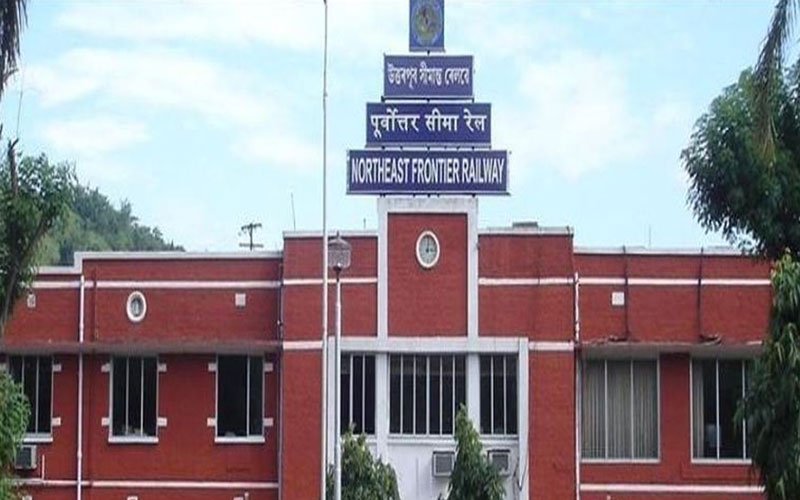
Guwahati: Restoration efforts at New Harangajao are being accelerated as the Northeast Frontier Railway (NFR) works to overcome ground instability that has disrupted train operations along the Lumding-Badarpur hill section.
The railway authority has set September 5 as the target for bringing Line No. 2 back into service, while Line No. 1 is expected to be restored by the end of September. Until then, trains are continuing to pass through Line No. 3 under additional safety precautions.
The New Harangajao yard has remained under pressure since July 20, when continuous settlement and sideways movement of the railway formation were observed. The disruption has been linked to changes in the area’s natural watercourse and drainage pattern, which led to a heavy flow of water from the hillside upstream.
NFR said the resulting accumulation of water beneath the ground affected the stability of the railway formation. In response, extensive engineering work is being carried out to remove excess water, improve drainage and strengthen the affected section.
The scale of the ongoing operation can be gauged from the deployment at the site. Around 500 personnel are working continuously, supported by 22 PC excavators, 12 JCB machines and 18 tractors. Specialised equipment, including pneumatic drills and hydraulic piling rigs, is also being used as part of the restoration effort.
According to NFR, the reopening of Line No. 2 would provide additional operational flexibility and could allow more trains to pass through the affected section. Restoration of Line No. 1 later in September is expected to further ease restrictions on train movement.
NFR Chief Public Relations Officer Kapinjal Kishore Sharma said all necessary manpower, machinery and other resources are being mobilised to complete the work as quickly as possible. However, the railway has maintained that restoration will proceed with passenger safety as the primary consideration.
Once the affected lines are restored, train operations through the Lumding-Badarpur hill section are expected to become more streamlined, easing the prolonged restrictions caused by the ground movement at New Harangajao.