

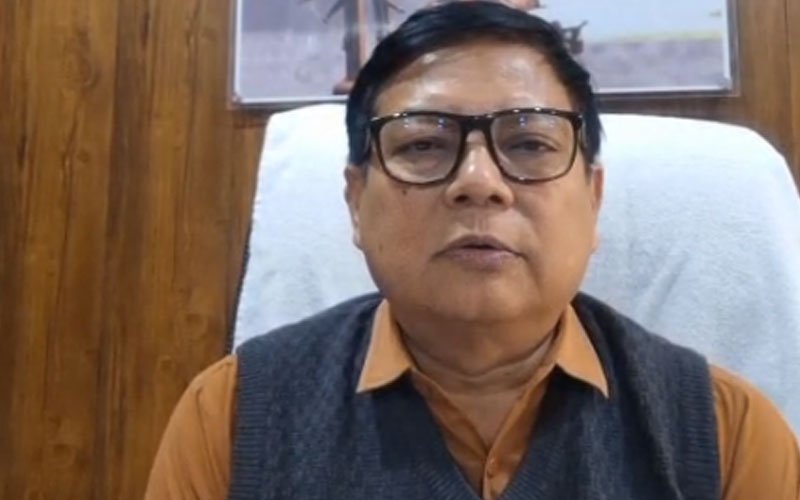
Guwahati: Former Leader of the Opposition and former MLA Debabrata Saikia has written to Prime Minister Narendra Modi, seeking a special allocation from the PM CARES Fund for relief, rehabilitation and livelihood restoration for people affected by the devastating floods that struck Upper Assam in July 2026.
In his letter dated August 20, Saikia said the floods had caused extensive damage across Upper Assam, particularly affecting Sivasagar, Charaideo, Jorhat and adjoining areas, including several parts of the erstwhile Nazira Legislative Assembly Constituency.
The letter follows an earlier representation submitted by Saikia on August 12, in which he had sought a Special Central Relief and Rehabilitation Package for flood-hit families.
Appeal for Rehabilitation Beyond Immediate Relief
Saikia said that, nearly a month after the disaster, many affected families were still struggling to recover from the destruction of their homes and sources of livelihood.
According to the letter, flood victims suffered losses involving houses, household belongings, livestock, agricultural assets, small businesses, shops, machinery and vehicles. He argued that the situation required a rehabilitation and livelihood restoration programme in addition to conventional disaster relief.
He stated that assistance available under existing SDRF and NDRF norms may not be sufficient to address the scale of losses suffered by families whose homes and income-generating assets were severely damaged or destroyed.
As an alternative to an immediate separate Central package, Saikia requested the Prime Minister, in his capacity as Chairperson of the PM CARES Fund, to consider a special allocation for the flood-affected population of Upper Assam.
Proposed Upper Assam Flood Relief Package
Saikia proposed a Special PM CARES Upper Assam Flood Relief, Rehabilitation and Livelihood Restoration Package covering enhanced support for families whose houses were fully or substantially destroyed.
The proposed assistance would also include support for restoring essential household items, special aid for families that lost earning members and livelihood restoration grants for small traders, artisans, mechanics, drivers, vendors and other self-employed persons.
The letter further sought assistance for losses involving livestock, poultry, agricultural implements, small tea plantations and other livelihood assets, along with the restoration of essential infrastructure in severely affected villages.
Additional support was proposed for vulnerable sections, including elderly persons, widows, persons with disabilities and families with children.
Call for Transparent and Time-Bound Distribution
Saikia also urged that any assistance approved under the proposed package should be distributed through a transparent, beneficiary-oriented and time-bound mechanism.
He called for district-wise and village-wise identification of genuinely affected families and public disclosure of beneficiary lists, stating that assistance should reach flood victims without discrimination or political consideration.
In the concluding part of his appeal, Saikia urged the Board of Trustees of the PM CARES Fund to consider an interim or special allocation at the earliest, saying that many flood-affected families were continuing to struggle to rebuild their homes and restore their livelihoods.