

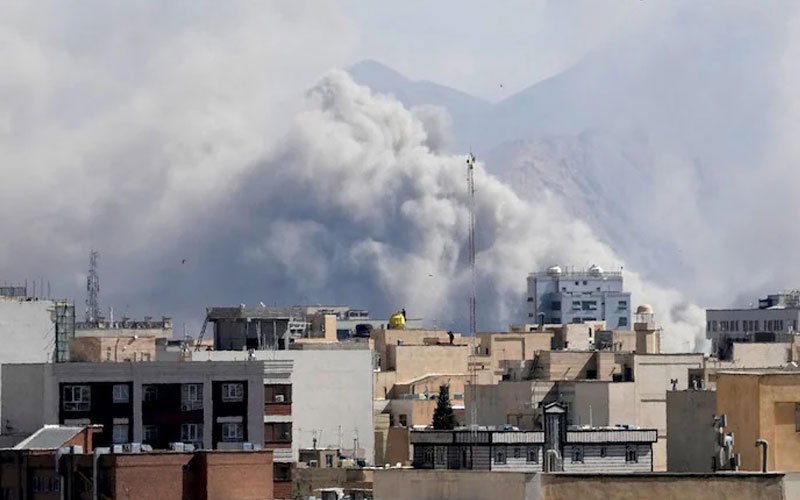
Washington/Tehran, November 3, 2026: One of the world’s most strategically important maritime corridors has once again become a flashpoint in the Middle East after American forces carried out military strikes on Iran’s Qeshm Island, raising fresh questions about regional stability and the prospects for peace.
The reported attack took place on November 2 near the Strait of Hormuz, a critical passage connecting the Persian Gulf to international energy markets. US officials said the operation was limited and defensive, rather than the beginning of a renewed large-scale military offensive.
The incident comes as Washington and Tehran explore a possible diplomatic settlement following months of conflict that have disrupted shipping and pushed energy prices higher.
Iranian Media Reports Explosions Near Strait of Hormuz
The latest confrontation came to light after Iranian media reported unusual military activity around Qeshm Island, situated off Iran’s southern coastline.
Iran’s state news agency IRNA said residents heard five explosions in rapid succession. Local accounts also described aircraft flying over the area.
The Wall Street Journal subsequently reported that American forces had targeted the island, citing US officials familiar with the operation.
Reuters and other international news organisations later reported that American officials acknowledged limited strikes against Iranian targets.
However, the precise locations struck, the extent of damage and whether the operation caused casualties remained unclear.
US Military Action Linked to Threats Against Aircraft and Ships
American officials have linked the latest strikes to Iranian military activity in and around the Strait of Hormuz.
According to Reuters and CNN, the operation was intended to counter Iranian forces using surface-to-air missiles against American military assets.
One US official indicated that the strikes followed an incident involving Iranian fire directed at a US aircraft.
The Wall Street Journal also reported that Washington had conducted smaller military operations against Iranian targets in recent weeks without making public announcements.
Officials reportedly sought to prevent those actions from being interpreted as a decision to restart the broader military campaign.
The distinction is significant because even limited exchanges of fire could complicate diplomatic efforts and increase the risk of unintended escalation.
Qeshm Island’s Strategic Position Raises International Concerns
Qeshm Island is not simply another location along Iran’s coastline. Its position near the entrance to the Strait of Hormuz gives it considerable strategic importance.
The island is located close to shipping lanes used by oil tankers, cargo vessels and other commercial ships travelling between the Persian Gulf and international markets.
Military installations on and around the island have attracted attention during the conflict because of their proximity to maritime traffic.
For countries dependent on Gulf energy exports, security around Qeshm and the surrounding waters remains a major concern.
Any additional disruption to shipping could place pressure on global supply chains, maritime insurance costs and petroleum prices.
Trump Administration Faces Diplomatic and Military Challenges
The reported attack occurred as US President Donald Trump continued to suggest that a negotiated settlement with Iran remained possible.
Speaking to reporters on Monday, Trump played down the possibility of immediately restarting a major offensive after the November 3 US midterm elections.
Vice President JD Vance also expressed optimism about the prospects for an agreement, indicating that diplomatic discussions had made progress.
However, the latest military activity demonstrates that tensions remain unresolved despite those diplomatic signals.
The United States continues to face competing priorities: protecting its military personnel and commercial shipping interests while pursuing an agreement that could reduce hostilities.
Israel Reportedly Seeking Stronger Action Against Iran
The situation has become more complicated amid reports that Israeli Prime Minister Benjamin Netanyahu has encouraged Washington to consider additional military strikes against Iran.
According to reports by international news organisations, Netanyahu has been pressing for a stronger American response to Iranian military capabilities.
Trump, however, has publicly emphasised the possibility of a diplomatic agreement, even while maintaining pressure on Tehran.
The differing approaches highlight uncertainty over how the United States and its regional partners intend to address the conflict in the coming weeks.
Global Energy Markets Closely Watching Developments
The Strait of Hormuz remains one of the most closely monitored waterways in the international energy sector.
Disruption to commercial traffic through the strait has affected energy markets since the conflict began in late February.
Oil prices fell sharply on November 2 as expectations of a potential diplomatic breakthrough encouraged optimism among traders.
Nevertheless, the latest reported strikes have highlighted the continuing security risks surrounding the waterway.
Further military exchanges could weaken market confidence, particularly if they threaten commercial vessels or important energy infrastructure.
International Attention Turns to Washington and Tehran
Questions remain about whether the latest operation represents an isolated defensive response or part of a continuing series of military exchanges.
The US Department of Defense referred requests for comment to US Central Command, which had not provided a detailed public account when the initial reports emerged.
Iranian authorities had also not released a full assessment of the reported explosions on Qeshm Island.
With diplomatic negotiations continuing and regional security concerns unresolved, the coming days could prove important for determining the direction of the conflict.
For now, the Strait of Hormuz remains under close international scrutiny as governments, shipping operators and energy markets assess the possibility of further confrontation.