

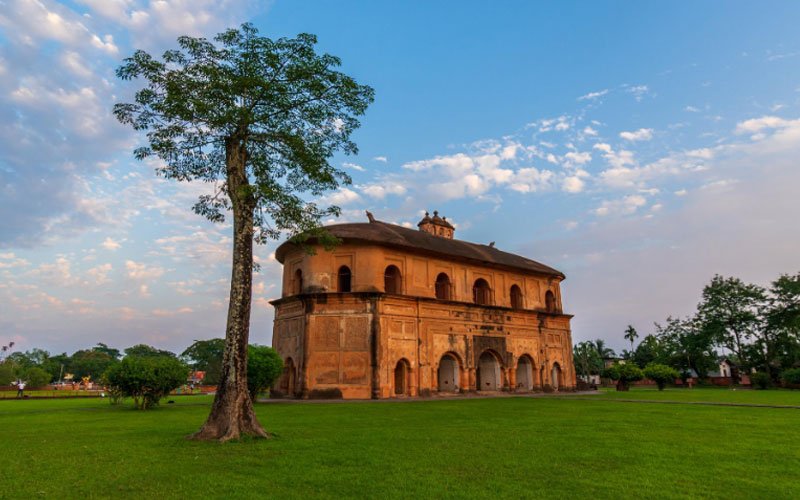
Sivasagar, Assam: Assam’s historic Rangpur-Sivasagar Historic Ensemble has taken an important step towards international heritage recognition after India formally submitted the site to UNESCO for consideration under the World Heritage framework.
According to information shared by Assam Chief Minister Himanta Biswa Sarma, the submission was formally made by India’s delegation to UNESCO on June 19, 2026, under cultural criteria (iii) and (iv).
The proposed heritage property represents the architectural, cultural and engineering achievements of the Ahom dynasty, which ruled large parts of the Brahmaputra Valley for nearly six centuries.
Historic Capital of the Ahom Kingdom
The Rangpur-Sivasagar landscape preserves important remains of the Ahom period, particularly from the 17th and 18th centuries. The ensemble includes two major components—Rangpur and Sivasagar—and reflects the organisation of an important pre-modern political and ceremonial centre.
Rangpur was established as a planned capital by Swargadeo Rudra Singha in the early 18th century. The historic landscape subsequently developed into a complex network of royal buildings, religious structures, water reservoirs, roads, bridges and defensive installations.
The UNESCO documentation describes the ensemble as an exceptional example of how architecture, urban planning and water management were integrated into a single cultural landscape.
Rang Ghar and Talatal Ghar Among Major Attractions
The proposed heritage property contains several of Assam’s most significant Ahom monuments.
Among them is Rang Ghar, the famous royal amphitheatre where members of the Ahom royalty and nobility watched sporting events and participated in cultural celebrations.
Another major structure is Talatal Ghar, the royal palace complex at Rangpur. Its distinctive multi-level construction, defensive features and historical association with the Ahom administration make it an important surviving example of the kingdom’s secular architecture.
The ensemble also includes important temple groups at Joysagar, Gaurisagar and Sivasagar, along with structures such as Ghanashyam House, Fakuwa Doul and Pohugarh.
Advanced Water Management System
One of the most distinctive aspects of Rangpur-Sivasagar is its extensive network of man-made water bodies.
The Joysagar, Gaurisagar and Sivasagar tanks, together with numerous smaller ponds and associated embankments, demonstrate the Ahoms’ sophisticated approach to water management.
These reservoirs served several purposes, including supplying water, supporting agriculture, facilitating religious activities and strengthening the organisation and resilience of the royal landscape.
The UNESCO nomination also highlights traditional engineering techniques used to regulate water levels, protect embankments and integrate reservoirs with surrounding temples, palaces and other structures.
Six Centuries of Ahom Heritage
The historical significance of the ensemble is closely connected to the long rule of the Tai-Ahom dynasty in Assam.
The Ahoms entered the region under Siu-ka-pha in 1228 CE and gradually established a powerful kingdom in the Brahmaputra Valley. Over the following centuries, the dynasty developed distinctive political, military, cultural and architectural traditions while interacting with and assimilating elements from the region’s diverse communities.
The kingdom ultimately came to an end in the 19th century following the Burmese invasions and the subsequent British annexation of Assam.
UNESCO Criteria Highlight Cultural and Technological Significance
The proposed nomination seeks recognition under two UNESCO cultural criteria.
Criterion (iii) highlights the ensemble as an exceptional testimony to the cultural traditions, belief systems and statecraft of the Tai-Ahom polity, including traditions that continue to influence Assam’s cultural life.
Criterion (iv) focuses on the ensemble’s architectural and technological significance, particularly its water-based urban planning, palace-fort structures and ceremonial infrastructure.
The combination of monumental architecture, hydraulic engineering, religious structures and planned roads makes Rangpur-Sivasagar an important example of pre-modern urban development in South Asia.
Another Major Step for Assam’s Heritage
The proposed UNESCO submission comes after the Charaideo Moidams were inscribed on the UNESCO World Heritage List in 2024.
While the Charaideo Moidams represent the sacred burial tradition of the Ahom royalty, Rangpur-Sivasagar reflects the political and ceremonial landscape associated with the kingdom’s rule.
Chief Minister Himanta Biswa Sarma welcomed the latest development and expressed gratitude to Prime Minister Narendra Modi for supporting efforts to secure wider international recognition for Assam’s heritage.
The UNESCO submission does not itself mean that Rangpur-Sivasagar has already received World Heritage status. It represents an important stage in India’s process of seeking UNESCO recognition for the historic ensemble.
If successfully inscribed in the future, the recognition could further strengthen the international profile of Sivasagar and Assam’s Ahom heritage, while drawing greater attention to its architecture, indigenous engineering traditions and living cultural practices.