

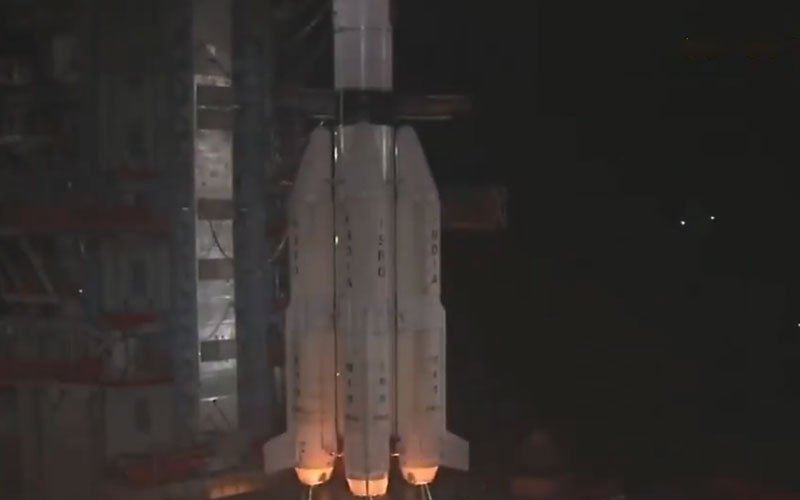
Guwahati, October 31, 2026: India’s drive towards greater independence in satellite-based navigation has received a fresh boost following the successful deployment of the NVS-03 satellite by the Indian Space Research Organisation (ISRO). The achievement is expected to strengthen the country’s indigenous navigation infrastructure and enhance its strategic capabilities.
The satellite was launched aboard the GSLV-F18 rocket from the Satish Dhawan Space Centre in Sriharikota, Andhra Pradesh, at 11:51 PM on Friday, October 30.
ISRO confirmed that the spacecraft had been successfully placed into its intended Geosynchronous Transfer Orbit, marking the completion of a crucial stage of the mission.
The launch represents the 20th flight of India’s Geosynchronous Satellite Launch Vehicle and another step towards reinforcing the Navigation with Indian Constellation (NavIC) system.
Assam Health Minister Ashok Singhal Hails ISRO’s Achievement
Assam Health and Family Welfare Minister Ashok Singhal congratulated ISRO scientists and engineers on the successful mission, highlighting its importance for India’s technological independence and national security.
In a post on social media, Singhal expressed confidence that the launch would contribute to restoring and strengthening NavIC’s capabilities while improving precision navigation services.
He also emphasised the importance of developing indigenous technologies to advance the country’s strategic self-reliance under the Atmanirbhar Bharat initiative.
Himanta Biswa Sarma Congratulates Scientists
Assam Chief Minister Dr Himanta Biswa Sarma also welcomed the successful mission, describing it as an important achievement for India’s independent navigation programme.
The Chief Minister highlighted the potential benefits of a stronger domestic satellite navigation network, particularly in reducing reliance on foreign systems for positioning and mapping services.
He also underlined the strategic importance of NavIC for India’s defence preparedness and congratulated the scientists responsible for the mission.
Prime Minister Narendra Modi similarly praised ISRO’s scientists and engineers, noting that the successful launch would help strengthen India’s indigenous satellite navigation capabilities and promote self-reliance in critical technologies.
NVS-03 Equipped with Advanced Navigation Technology
The NVS-03 spacecraft is the third satellite in India’s next-generation navigation satellite series, developed to maintain and improve services provided through NavIC.
The satellite carries an indigenously developed atomic clock alongside additional atomic clocks, a critical component for generating the highly accurate timing signals required for satellite navigation.
It also supports navigation signals in the L1 frequency band, in addition to the existing L5 and S-band services, expanding the system’s potential compatibility with modern navigation equipment.
NavIC is designed to provide positioning, navigation and timing services throughout India and across an area extending approximately 1,500 kilometres beyond the country’s boundaries.
Its applications include transportation, maritime operations, location-based services, emergency response and defence-related activities.
Successful Launch Marks Important Step for India’s Space Programme
ISRO Chairman Dr V Narayanan congratulated the mission teams following the successful orbital insertion of NVS-03.
The spacecraft’s deployment represents a significant milestone in efforts to improve the reliability and continuity of India’s regional satellite navigation network.
Further orbital manoeuvres and system checks will be necessary before the satellite can be commissioned for regular navigation services.
The GSLV-F18 mission highlights India’s growing capability to develop and deploy advanced space technology while supporting the country’s broader objective of maintaining independent navigation infrastructure for civilian and strategic needs.