

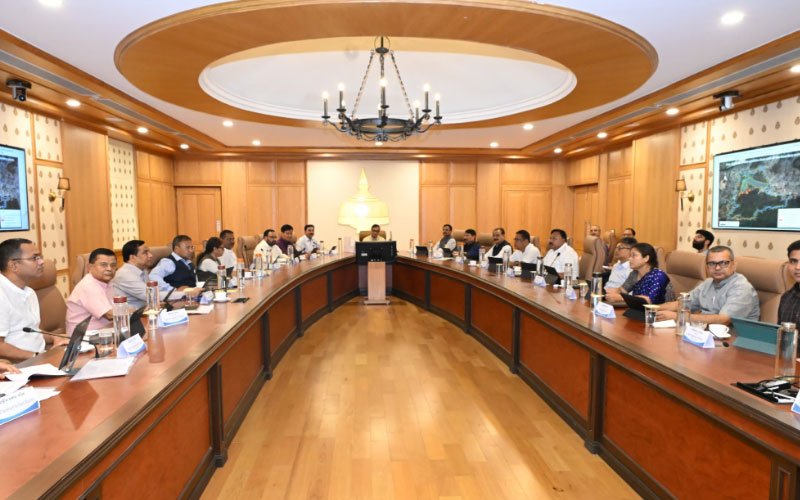
The Assam Cabinet, chaired by Chief Minister Himanta Biswa Sarma, on March 10, 2026 approved several important policy decisions aimed at strengthening governance, boosting economic development, and promoting social welfare across the state. The decisions were announced by the Chief Minister on social media platform X, highlighting initiatives related to urban development, welfare schemes, education governance, and cultural recognition.
PM SVANidhi Scheme to Cover All Census Towns
One of the major decisions taken during the cabinet meeting was the expansion of the PM SVANidhi Scheme across all Census Towns in Assam. The scheme, which provides affordable loans to street vendors to support their livelihoods, will now be implemented in areas beyond statutory urban local bodies.
The cabinet approved the implementation of the restructured PM SVANidhi scheme in all Census Towns of the state. The Commissionerate of Panchayat and Rural Development will act as the implementing agency. The move is expected to extend financial assistance to a larger number of small vendors and self-employed individuals, particularly in semi-urban regions where many vendors operate outside municipal limits.
Officials believe that the expansion will help strengthen the informal economy while improving financial inclusion for small entrepreneurs.
Inclusion of Tea Garden Communities in State MOBC List
In another significant decision, the Assam Cabinet approved the inclusion of 37 Tea Garden Labourer and Ex-Labourer communities, along with Tea Garden Tribes and Ex-Tribes, in the State list of More Other Backward Classes (MOBC).
The inclusion will be subject to the receipt of verified reports from the respective District Commissioners. Once implemented, this move is expected to provide members of these communities with improved access to reservations and other welfare benefits in education and government employment.
The decision aims to address long-standing demands from tea garden communities, who constitute a substantial section of Assam’s workforce and social fabric.
Customized Industrial Incentives Worth Rs. 24,800 Crore
The cabinet also approved granting customized incentives to six enterprises under the Industrial and Investment Promotion Policy of Assam (IIPA) 2019, as amended.
These projects together involve a proposed investment of Rs. 24,800 crore. The government expects the investments to significantly boost industrial growth, generate employment opportunities, and enhance the state’s economic output.
Officials stated that the incentives would encourage both domestic and external investors to establish large-scale industrial projects in Assam, strengthening the state’s position as an emerging investment destination in Northeast India.
Renaming of Barpeta Medical College
The cabinet approved renaming Fakhruddin Ali Ahmed Medical College and Hospital in Barpeta as Barpeta Medical College and Hospital.
According to the government, another suitable institution will be named after Fakhruddin Ali Ahmed at a later stage to honour his legacy appropriately.
The decision aims to streamline the identity of the medical institution while preserving the legacy of national leaders through other institutions.
Engineering College Named After Chabilal Upadhyaya
To honour a prominent freedom fighter and social reformer from Assam, the cabinet approved naming the newly constructed engineering college at Behali in Biswanath district as Chabilal Upadhyaya Engineering College.
The move recognizes the contributions of Chabilal Upadhyaya to Assam’s socio-political history and ensures that future generations remember his role in the freedom movement and social reforms.
Gazetted Holiday for Ali Aye Ligang
The cabinet also approved declaring a gazetted state holiday for the traditional festival Ali Aye Ligang beginning next year.
Ali Aye Ligang is one of the most significant festivals of the Mising community and marks the beginning of the agricultural cycle. The decision to grant a statewide holiday reflects the government’s effort to recognise and celebrate Assam’s cultural diversity and indigenous traditions.
Community leaders have welcomed the move, describing it as a step toward greater cultural recognition and inclusivity.
Land Allotment for Zubeen Kshetra Memorial
Another notable decision was the allotment of government land at No. 2 Kamarkuchi village for the establishment of Zubeen Kshetra, a memorial and cremation ground dedicated to the late Assamese cultural icon Zubeen Garg.
The proposed site will serve as a place of remembrance honouring the singer’s contributions to Assamese music and culture.
Land for Industrial Development in Goalpara
To promote industrial growth, the cabinet approved the allotment of government land at Dahikata village in Goalpara district to the Industries, Commerce and Public Enterprises Department.
The land will be used for industrial development projects aimed at attracting investments, creating employment opportunities, and boosting economic activities in the region.
South East Guwahati Water Supply Project
The cabinet also approved the South East Guwahati Water Supply Project, which aims to improve drinking water infrastructure in the rapidly expanding areas of the city. The project will help address water supply challenges faced by residents in several localities of southeastern Guwahati.
Officials said the initiative forms part of the government’s broader strategy to upgrade urban infrastructure and ensure sustainable water supply for the growing population of the state capital.
Governance Framework for New State Universities
Another important decision includes the approval of a governance framework for newly established state universities in Assam. The framework is expected to streamline administration, improve academic standards, and ensure transparency in university management.
The move comes as Assam continues to expand its higher education infrastructure to meet increasing demand from students across the state.
Focus on Development and Welfare
The latest cabinet decisions highlight the state government’s focus on inclusive growth, infrastructure expansion, and cultural recognition. From expanding welfare schemes and strengthening industrial investment to improving governance in education and recognizing indigenous festivals, the decisions are expected to have wide-ranging impacts across Assam.
The initiatives, according to the Chief Minister, aim to strengthen economic development while ensuring that welfare programs reach the grassroots level.