

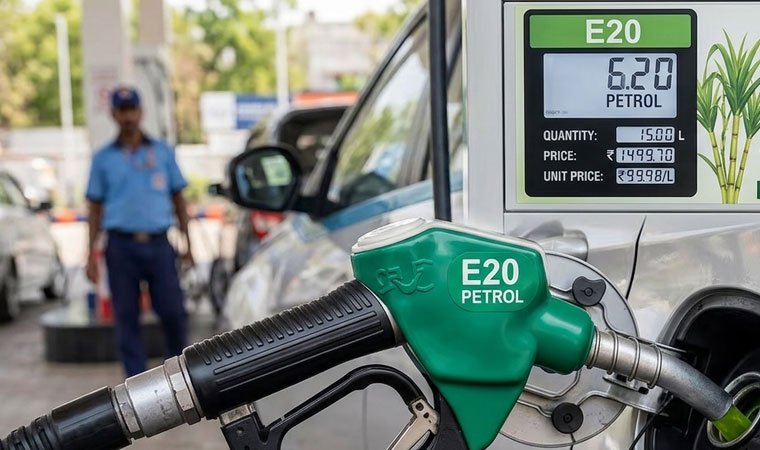
New Delhi: The nationwide rollout of ethanol-blended petrol has been carried out through a structured, scientifically validated, and phased approach, industry experts said on Saturday, stressing that both vehicles and fuel have been aligned for E20 compatibility since 2023.
Speaking at a media briefing, Rahul Bharti, Senior Executive Officer (Corporate Affairs) at Maruti Suzuki India Limited, said the transition to E20 fuel has not happened overnight but has been implemented gradually over several years. He noted that India first adopted E10 petrol before mandating E20 material compliance for new vehicles from 2023, ensuring compatibility between vehicles and fuel.
Addressing concerns over the use of ethanol-blended petrol, Bharti said the transition has been supported by regulatory measures and technical preparedness across the automotive industry.
Former Chairman and Managing Director of Engineers India Ltd, Vartika Shukla, said India blended only about 1.5 per cent ethanol in petrol during 2013–14. She noted that the country’s target of achieving 20 per cent ethanol blending (E20) was successfully reached in December 2025, five years ahead of the original deadline.
Shukla said the ethanol blending programme was developed through extensive stakeholder consultations and is backed by scientific evidence and comprehensive testing conducted by automobile manufacturers, the Automotive Research Association of India (ARAI), and the Society of Indian Automobile Manufacturers (SIAM). She added that the initiative follows global best practices aimed at reducing carbon emissions.
Vikram Gulati, Country Head and Executive Vice President (Corporate Affairs and Governance) at Toyota Kirloskar Motor, said the automotive industry operates under stringent standards governing vehicle quality, emissions, safety, and performance. He said every vehicle undergoes rigorous testing, certification, and homologation before being introduced to the market, while fuel quality is also subject to strict specifications.
Highlighting the environmental benefits of ethanol, Gulati said the plant-based fuel supports India’s decarbonisation efforts by helping reduce greenhouse gas emissions and dependence on fossil fuels.
The experts reiterated that the transition to E20 fuel has been implemented in a systematic and evidence-based manner, ensuring vehicle compatibility, consumer safety, and environmental sustainability while advancing India’s clean energy objectives.