

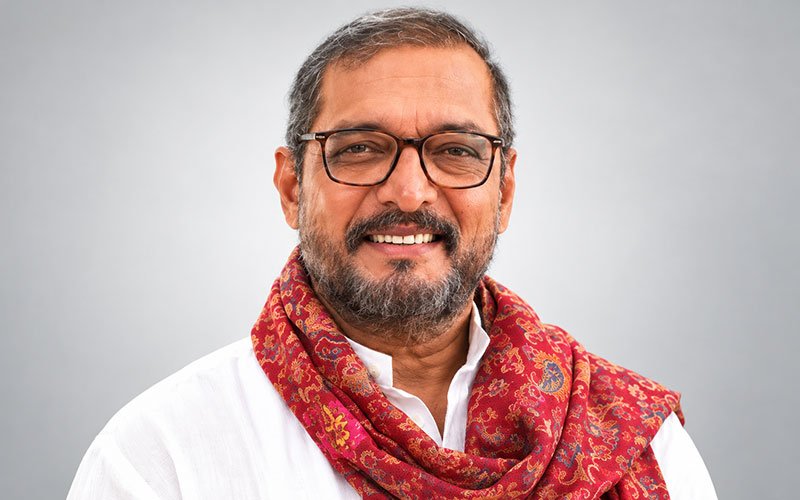
The Indian film industry is mourning the death of veteran actor Nana Patekar, who passed away at the age of 75 after suffering a cardiac arrest. The acclaimed actor, known for his powerful performances in Hindi and Marathi cinema, died in Goa on Thursday.
Patekar was found unconscious at his residence in Dona Paula, Goa, and was taken to a hospital for treatment. According to hospital officials cited by ANI, doctors attempted continuous CPR for around 45 minutes but could not revive him. A medico-legal case has been registered, while authorities have initiated a post-mortem examination. A three-member medical panel was constituted for the autopsy.
His final rites are scheduled to take place at his farmhouse in Donje, on the outskirts of Pune, Maharashtra. According to PTI, his mortal remains are expected to reach Pune later on Thursday before the final rites. The Maharashtra government has also announced that the veteran actor will be accorded a state funeral in recognition of his contribution to Marathi theatre and Hindi and Marathi cinema.
The news of Patekar’s death has prompted an outpouring of grief from colleagues, actors and fans. Several members of the film fraternity remembered him for his exceptional acting ability, simplicity and distinctive personality. Tributes have highlighted the influence of his performances across generations of Indian cinema.
Born Vishwanath Patekar in 1951, Nana Patekar began his acting career in the late 1970s and gradually established himself as one of India’s most versatile performers. His notable films include Gaman, Parinda, Prahaar, Krantiveer, Agni Sakshi, Yashwant, Ab Tak Chhappan, Apaharan, Welcome and Natsamrat.
Throughout his career, Patekar moved comfortably between intense dramatic roles, socially driven characters and mainstream cinema. His performances earned him three National Film Awards, while the Government of India honoured him with the Padma Shri in 2013 for his contribution to the arts.
With a career spanning cinema, theatre and television, Nana Patekar developed a reputation for his commanding screen presence, powerful dialogue delivery and ability to portray complex characters. His death marks the end of a distinctive chapter in Indian acting, leaving behind a body of work that continues to be remembered by audiences and fellow performers.