

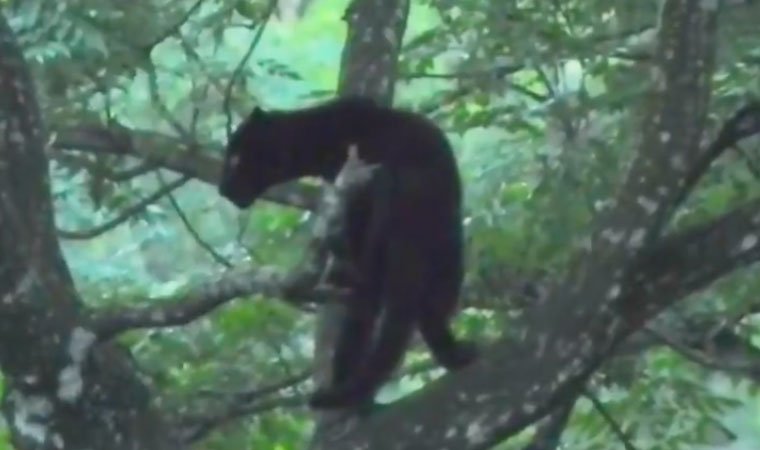
A rare sighting of a black panther at Manas National Park has created widespread excitement among wildlife enthusiasts, conservationists and nature lovers across Assam, after Chief Minister Himanta Biswa Sarma shared the remarkable moment on social media platform X.
Posting a photograph of the elusive animal, the Chief Minister described the sighting as “rare and powerful,” highlighting the importance of preserving Assam’s rich forest ecosystem.
“A rare and powerful sighting of a Black Panther in Manas National Park 🐾. Moments like these remind us how quietly our forests thrive, and how deeply they depend on our responsibility to protect and preserve them,” Sarma wrote.
The post quickly drew attention online, with many users praising the biodiversity of Assam and the success of ongoing wildlife conservation efforts in the State.
Senior Assam minister Chandra Mohan Patowary also shared the image on X, calling the sighting “a sight rare enough to feel unreal.” Comparing the majestic animal to the fictional character Bagheera from The Jungle Book, Patowary wrote that the black panther moved silently through the dense forests of Manas carrying “an aura of mystery and grace.”
The photograph shared by the minister was credited to wildlife photographer Sanjib Das.
Wildlife experts say black panthers are not a separate species, but melanistic variants of leopards (Panthera pardus). Due to a rare genetic condition known as melanism, the animals develop unusually dark fur, while their typical rosette patterns remain faintly visible under certain lighting conditions.
Sightings of black panthers are considered extremely rare in Northeast India. In Assam, confirmed records have largely remained limited to protected forest regions such as Manas National Park and parts of Arunachal Pradesh, including Pakke Tiger Reserve.
The latest sighting comes at a time when reports of leopard movement in human-dominated landscapes have been increasing in Upper Assam, particularly in tea garden areas of Tinsukia district.
Recently, a black panther was reportedly spotted at the Hansara Division of Raidang Tea Estate near Doomdooma, triggering both fascination and concern among local residents and tea workers. Eyewitnesses claimed the animal briefly emerged from dense vegetation before vanishing back into the undergrowth.
The sighting created a buzz across nearby areas after a purported video of the animal began circulating widely on social media. Forest officials later intensified surveillance in the region amid concerns over rising human-animal encounters.
Interestingly, the Raidang Tea Estate has witnessed frequent leopard movement in recent months. Forest sources stated that six leopards have been trapped from the estate during the past month alone. Wildlife observers believe habitat loss, shrinking forest cover and declining prey availability are forcing big cats to move closer to human settlements and tea plantations in search of food and shelter.
Officials from the Forest Department have stressed the need for scientific conservation measures and stronger habitat protection to reduce man-animal conflict while ensuring the survival of rare wildlife species.
Nature lovers and conservationists have described the latest black panther sighting at Manas National Park as a powerful reminder of Assam’s extraordinary biodiversity and ecological richness.
A UNESCO World Heritage Site, Manas National Park remains one of India’s most important wildlife habitats, known for sheltering several endangered and rare species including tigers, elephants, clouded leopards, golden langurs and one-horned rhinoceroses.