

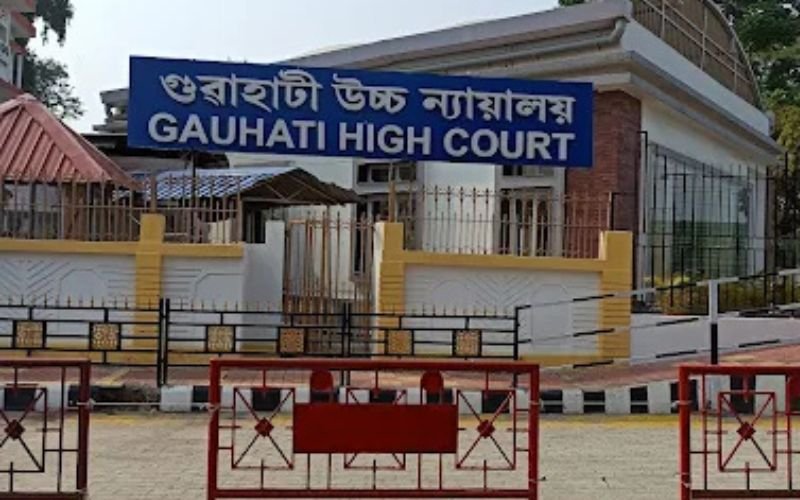
Guwahati, April 10: The Gauhati High Court has directed the Assam government to file a detailed affidavit clarifying whether mandatory forest clearance was obtained for the ambitious Guwahati Ring Road Project.
A division bench comprising Ashutosh Kumar and Arun Dev Choudhury issued the directive while hearing a public interest litigation (PIL 22/2026) filed by petitioners Arkashish Chaliha and Mahesh Deka.
The petition raises concerns over a recent e-tender issued by the Divisional Forest Officer of the Guwahati Wildlife Division for felling trees within the Amchang Wildlife Sanctuary and its surrounding eco-sensitive zone. The petitioners termed the move premature and warned of irreversible environmental damage if carried out without proper scrutiny.
Appearing for the state, Additional Advocate General P N Goswami argued that all necessary clearances, including those under the Forest (Conservation) Act, 1980, had already been secured. However, the court was not satisfied with the verbal assurance and sought a formal affidavit detailing compliance.
The bench also recorded the government’s assurance that the tender process for tree felling would not be finalised until the next hearing, scheduled for April 23, 2026.
The ₹6,000-crore Guwahati Ring Road Project, spanning 121 kilometres, is being developed by the National Highways Authority of India under a concession agreement signed in April 2025. The project includes a major bypass and a bridge over the Brahmaputra River.
While the petitioners clarified that they are not opposing the project itself, they objected to the current alignment of the bypass, which allegedly cuts through the Amchang Wildlife Sanctuary—an ecologically sensitive habitat home to elephants, gibbons, leopards, pangolins, and a key elephant corridor.
The plea also noted that although the National Board for Wildlife had granted conditional approval, including requirements for a comprehensive impact study and restrictions such as a ban on night construction, these conditions were allegedly not being properly followed.
The case has now set the stage for closer judicial scrutiny of environmental compliance in one of Assam’s largest infrastructure projects.