

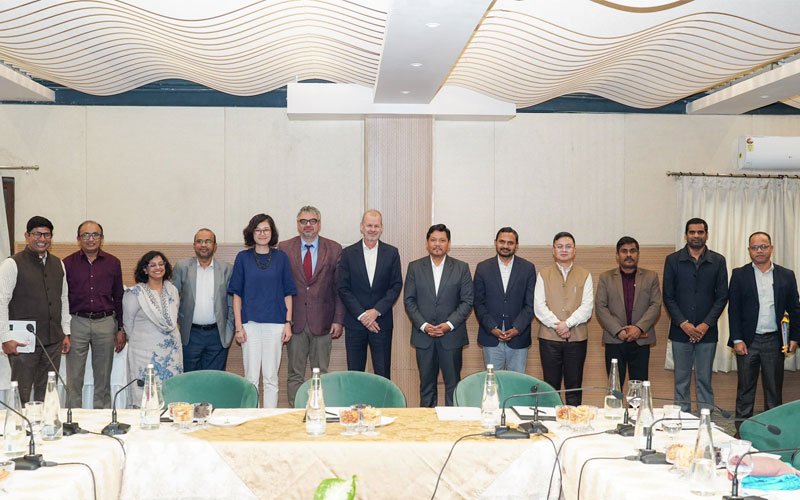
Meghalaya Chief Minister Conrad K. Sangma recently held an important meeting with Johannes Zutt to discuss the state’s ongoing collaboration with the World Bank across multiple development sectors. The discussion focused on strengthening Meghalaya’s governance model, improving social welfare outcomes, and unlocking the economic potential of the Northeast region.
Sharing details of the meeting through a post on X, the Meghalaya Chief Minister highlighted the state government’s “life-cycle and stakeholder-centric” governance approach, which aims to improve the quality of life of citizens through targeted interventions in key sectors such as maternal and child health, youth empowerment, entrepreneurship, and farmer welfare.
According to Sangma, Meghalaya has been working closely with the World Bank on several transformative initiatives that prioritize inclusive growth and sustainable development. The state government’s approach focuses on addressing the needs of citizens at different stages of life while ensuring that communities, farmers, entrepreneurs, and youth remain active stakeholders in the development process.
A major part of the discussion centered around expanding opportunities in agriculture and rural enterprise development across the Northeast. The Chief Minister stressed the importance of strengthening Agriconnect initiatives, improving MSME ecosystems, and building stronger logistics and value-chain networks to support regional economic growth.
He noted that the Northeast possesses immense untapped potential in sectors such as agriculture, floriculture, food processing, and entrepreneurship. However, realizing this potential would require better infrastructure, market connectivity, and modern systems that can support local producers and businesses.
The meeting also explored how improved logistics and integrated supply chains could help farmers and entrepreneurs from Meghalaya and other Northeastern states access larger domestic and international markets. Officials believe that with proper investment and policy support, the region could emerge as a major production and export hub for high-value agricultural and horticultural products.
The emphasis on MSME development reflects Meghalaya’s broader strategy to generate employment opportunities and encourage local entrepreneurship. The state government has been actively promoting startup culture, skill development, and small business support programs aimed at empowering young entrepreneurs and rural communities.
In recent years, Meghalaya has increasingly focused on leveraging partnerships with international organizations such as the World Bank to accelerate development projects in infrastructure, healthcare, education, livelihood generation, and governance reforms. The collaboration has supported several initiatives designed to strengthen public service delivery and improve socio-economic outcomes.
The Chief Minister also reiterated his optimism regarding future cooperation with the World Bank. He expressed confidence that continued collaboration would help Meghalaya implement innovative development models while positioning the Northeast as a key contributor to India’s economic growth.
The meeting comes at a time when Northeastern states are witnessing increased national and international attention due to their strategic location, rich natural resources, and growing potential in sectors like organic farming, tourism, food processing, and cross-border trade. Policymakers believe that improved connectivity and sustained institutional support could transform the region into a major economic gateway connecting India with Southeast Asian markets.
Observers say the discussions between the Meghalaya government and the World Bank reflect a broader push toward sustainable, inclusive, and region-specific development strategies aimed at creating long-term economic opportunities for the people of the Northeast.